
In the speedily evolving field of artificial intelligence (AI), code generators have become a critical application for automating software program development processes. These types of systems use superior algorithms to create and optimize signal, drastically reducing growth time and improving productivity. However, the particular complexity and level of AI code generators present distinctive challenges in ensuring the correctness and efficiency of the generated code. Parallel testing has appeared as being a powerful remedy to address these kinds of challenges. This post is exploring the benefits associated with parallel testing with regard to AI code generation devices, concentrating on speed, productivity, and accuracy.
What is Parallel Tests?
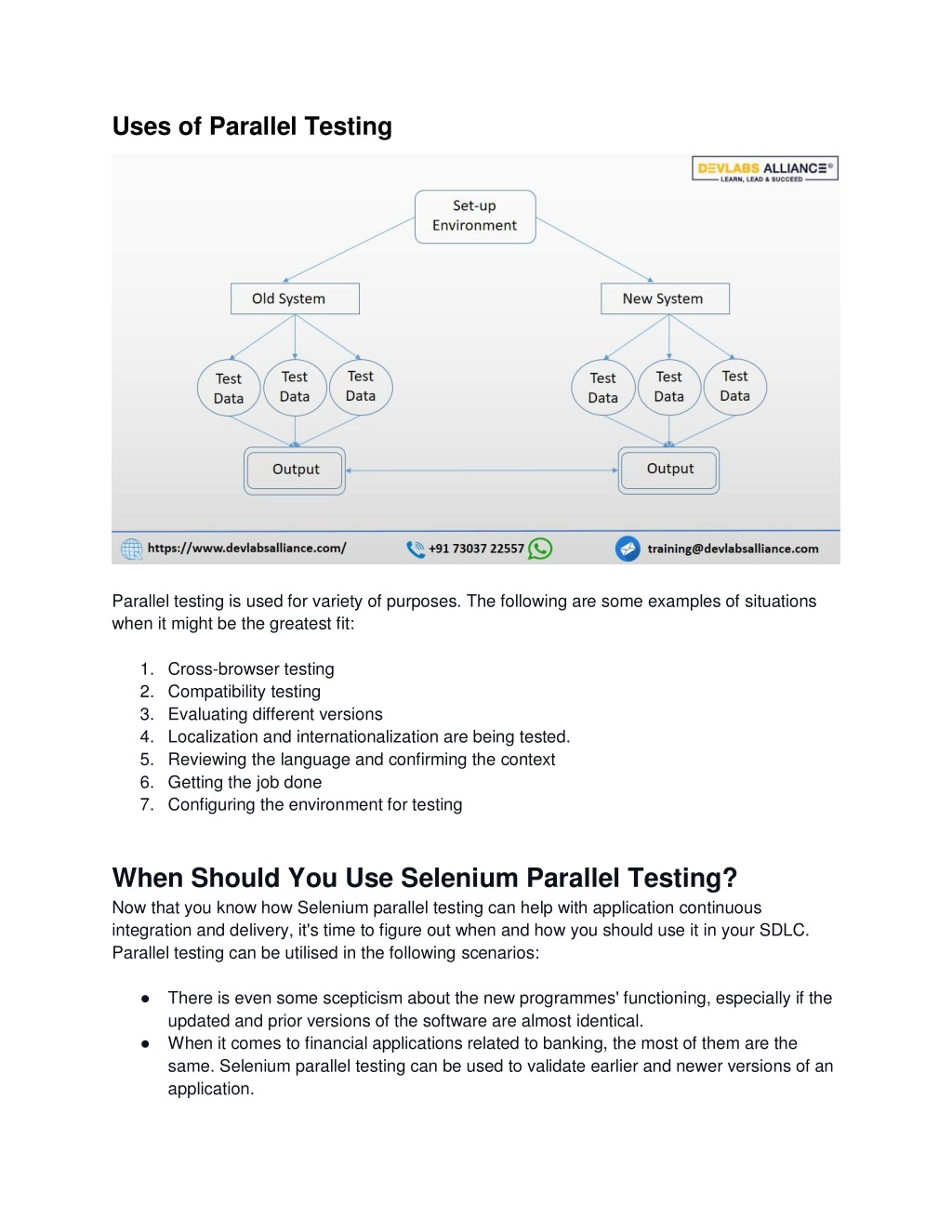
Parallel testing requires running multiple test out cases simultaneously quite than sequentially. This method leverages modern processing resources, such since multi-core processors in addition to distributed systems, in order to execute numerous tests in parallel. Simply by distributing the workload across multiple cpus or machines, seite an seite testing can substantially reduce your time needed to result in a extensive test suite.
Acceleration: Accelerating Test Execution
One of typically the primary benefits of seite an seite testing will be the remarkable improvement in test execution speed. Traditional sequential testing can be time-consuming, particularly when dealing with substantial codebases or intricate algorithms. Each test out case must always be run one following another, ultimately causing lengthier feedback cycles and even potential delays throughout identifying issues.
Seite an seite testing addresses this particular bottleneck by separating the test collection into smaller chunks and executing them concurrently. This method enables faster recognition of errors plus quicker validation associated with code changes. Within the context involving AI code power generators, where rapid iterations and updates usually are common, parallel tests ensures that comments is delivered rapidly, facilitating a even more agile development process.
For instance, look at an AI signal generator tasked with creating a large-scale application. Running tests sequentially could mean waiting hours or even days with regard to results. In contrast, parallel testing can finish the same test out suite in the fraction of the time, permitting developers to address issues more swiftly and maintain a consistent development pace.
Performance: Maximizing Resource Use
Parallel testing not simply speeds up typically the testing process but also enhances reference utilization. In standard testing environments, sources may be underutilized during idle periods between test executions. Parallel testing, in the other palm, optimizes resource use by leveraging available computing power even more effectively.
By disbursing test cases across multiple processors or machines, parallel assessment ensures that almost all available resources are usually actively engaged inside executing tests. This particular approach minimizes idle time and maximizes the efficiency in the testing infrastructure. Intended for AI code generators, this means of which testing is able to keep speed with the rapid development and application cycles of AI models, reducing down time and improving total productivity.
Furthermore, parallel testing can be particularly advantageous within cloud-based environments. Impair platforms offer scalable resources that can easily be dynamically given based on demand. By integrating parallel testing with cloud infrastructure, organizations can take good thing about on-demand computing power, additional enhancing efficiency and even cost-effectiveness.
Accuracy: Enhancing Test Coverage and even Reliability
Accuracy is definitely crucial when considering the performance and correctness of AI code generators. Conventional testing methods could possibly be prone to limits, for instance incomplete test out coverage or late detection of problems. Parallel testing read this by simply enabling more thorough and reliable assessment.
One of many key positive aspects of parallel assessment is the ability to execute a bigger quantity of test circumstances inside a given period of time. This increased test out coverage helps determine a wider variety of potential problems and ensures that various aspects of the generated code are thoroughly evaluated. By running multiple testing simultaneously, parallel assessment provides a better quality assessment of typically the AI code generator’s output.
Moreover, parallel testing can uncover problems that might end up being missed in sequential testing. Such as, concurrency-related bugs or timing issues may only turn out to be apparent when testing are run throughout parallel. By simulating real-world scenarios exactly where multiple processes or even threads are lively, parallel testing assists identify and address such issues, boosting the overall accuracy and reliability regarding the generated signal.
Implementation Factors
While parallel testing offers significant benefits, employing it effectively demands careful planning in addition to consideration. Key elements to address incorporate:
Test Design: Ensure that test cases are created to be independent and could run concurrently with no interference. Dependencies between tests can business lead to conflicts plus inaccurate results.
Source Allocation: Determine the correct resources required regarding parallel testing, such as the number of processors or impair instances. Proper share ensures optimal performance and avoids source bottlenecks.
Monitoring and even Reporting: Implement solid monitoring and confirming mechanisms to monitor the progress in addition to outcomes of seite an seite tests. This assists identify and handle issues promptly and ensures that test results are accurately captured and analyzed.
Scalability: Design the particular parallel testing system to scale using the scale typically the codebase plus the complexness of the checks. Scalable solutions could accommodate growing screening needs and evolving requirements.
Conclusion
Parallel testing has changed distinguishly the way we approach testing for AI code power generators, offering substantial rewards in terms of speed, efficiency, and accuracy. Simply by leveraging parallel setup, organizations can speed up the testing process, boost resource utilization, in addition to enhance the reliability regarding generated code. As AI code generation devices continue to advance in addition to play an increasingly central role throughout software development, adopting parallel testing methods will be important for maintaining high-quality outcome and achieving quick, reliable, and useful development cycles.
Incorporating parallel testing directly into the development workflow not only addresses the challenges of traditional testing strategies but also aligns using the dynamic nature of AI-driven computer code generation. As technologies evolves, embracing parallel testing will guarantee that AI signal generators remain efficient, accurate, and responsive to the requirements of recent software growth.