
Python is renowned intended for its simplicity in addition to simplicity of use, making that a popular selection for both novice and experienced developers. However, like virtually any programming language, Python has its quirks, particularly when it comes to error handling. Understanding exceptions—Python’s way associated with dealing with errors—is important for writing robust and efficient code. This article will delve in to common Python exceptions, their meanings, and even how to successfully debug them.
What are Exceptions?
Within Python, an exception is a good event that interrupts the normal movement of a program’s execution. When Python encounters an mistake that it cannot handle, it raises very. If not really caught, this software terminates, displaying a traceback that includes the sort of exception, an explanation, plus the line number where the error happened.
Choose Exceptions?
Exclusions are beneficial intended for several reasons:
Error Handling: They let you to respond to errors beautifully without crashing the particular program.
Debugging: They supply detailed information concerning what went incorrect and where.
Separating of Logic: They help separate error-handling code from typical code, making the particular codebase cleaner and even more maintainable.
Frequent Python Exceptions
Here’s a detailed appearance at some of the most typical exceptions in Python, what they suggest, and how to be able to fix them.
1. SyntaxError
Meaning: A new SyntaxError occurs any time Python encounters incorrect syntax. This could be as a result of lacking parenthesis, an broken character, or possibly a typo in the computer code.
Example:
python
Duplicate code
print(“Hello World”
Fix: Ensure just about all syntax rules will be followed, such while matching parentheses, proper indentation, and right use of keywords and phrases.
python
Copy signal
print(“Hello World”)
a couple of. TypeError
Meaning: The TypeError occurs for the operation or perform is applied to be able to a subject of incorrect type. For example, trying to concatenate a string with the integer.
Example:
python
Copy code
result = “The response is: ” + 42
Fix: Transfer the integer to a string using str() or ensure that will the types are usually compatible.
python
Replicate code
result = “The answer is certainly: ” + str(42)
3. website here
Which means: A NameError occurs when a variable is referenced ahead of it has been assigned a worth, or if it is definitely not defined in the current scope.
Example:
python
Replicate code
print(my_variable)
Fix: Ensure that the particular variable is identified before usage.
python
Copy code
my_variable = “Hello”
print(my_variable)
4. IndexError
Which means: An IndexError is usually raised when striving to access a good index in a list (or some other indexed collections) of which does not exist.
Example:
python
Duplicate code
my_list = [1, 2, 3]
print(my_list[3]) # IndexError: list index outside of range
Fix: Look into the length of typically the list or make use of a valid list.
python
Copy code
if len(my_list) > 3:
print(my_list[3])
different:
print(“Index out of range”)
5. KeyError
Meaning: A KeyError occurs when seeking to access a new dictionary which has a crucial that does certainly not exist.
Example:
python
Copy code
my_dict = “name”: “Alice”
print(my_dict[“age”]) # KeyError: ‘age’
Resolve: Make use of the. get() approach or check in case the key exists.
python
Copy signal
print(my_dict. get(“age”, “Key not found”))
6th. ValueError
Meaning: Some sort of ValueError occurs when an operation receives an argument of the right type but an improper value. Such as, trying to convert some sort of non-numeric string to an integer.
Example:
python
Duplicate code
number = int(“twenty”) # ValueError: invalid literal regarding int() with base 10
Fix: Assure the value will be valid before transformation.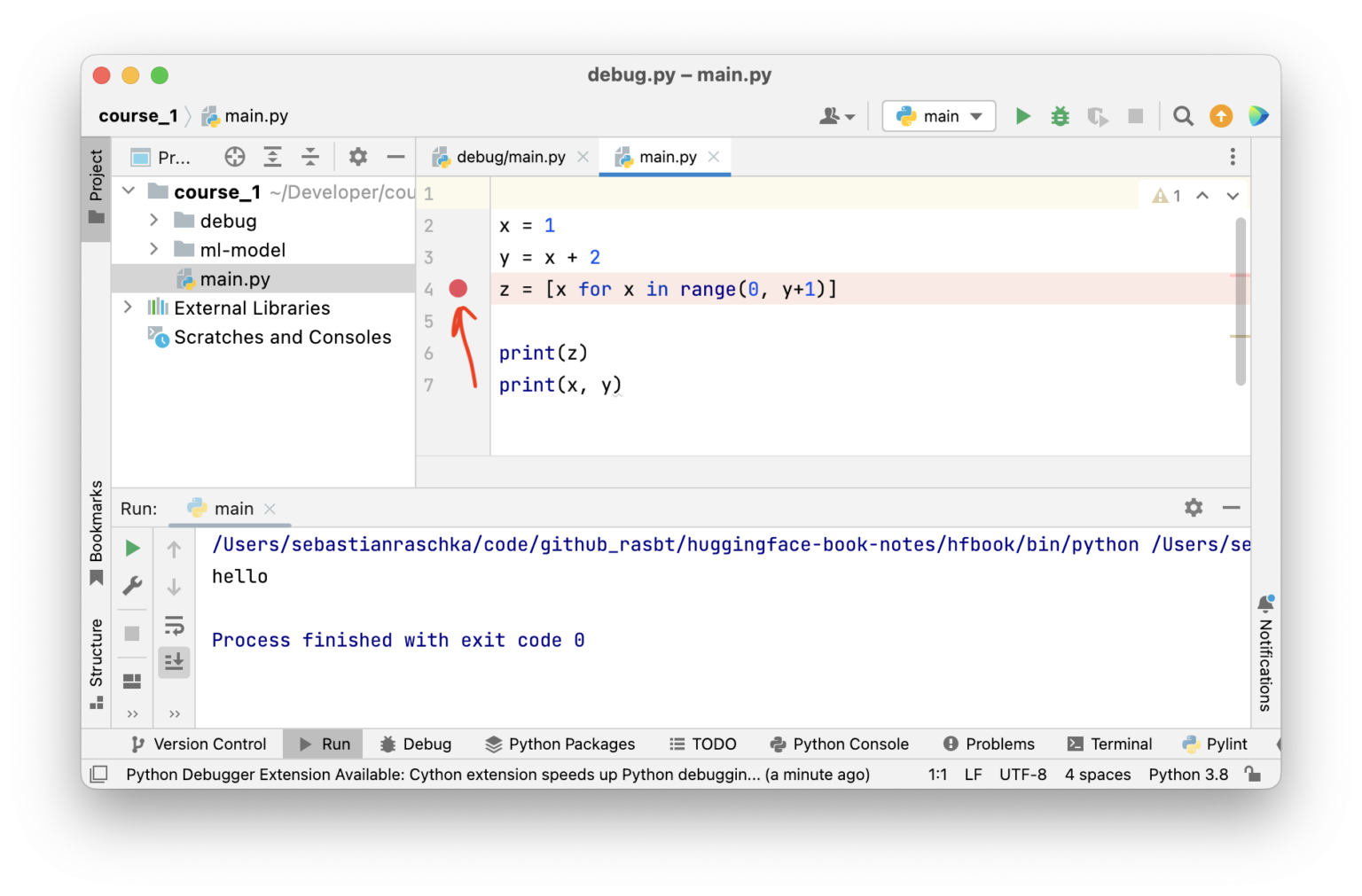
python
Copy code
try:
number = int(“twenty”)
except ValueError:
print(“Please provide the valid number. “)
7. ZeroDivisionError
Meaning: A ZeroDivisionError happens when attempting to divide many by simply zero.
Example:
python
Copy program code
end result = 10 / 0 # ZeroDivisionError
Fix: Check if typically the denominator is focus before performing the division.
python
Duplicate code
denominator = 0
if denominator! = 0:
outcome = 10 / denominator
else:
print(“Cannot divide by focus. “)
8. FileNotFoundError
Meaning: A FileNotFoundError occurs when attempting to open a file that does certainly not exist.
Example:
python
Copy code
using open(“non_existent_file. txt”, “r”) as file:
articles = file. read()
Fix: Ensure the file exists or handle the exclusion gracefully.
python
Backup code
try:
together with open(“non_existent_file. txt”, “r”) as file:
written content = file. read()
except FileNotFoundError:
print(“File not found. Remember to check the record name and course. “)
Debugging Python Exceptions
When a good exception is increased, Python generates a new traceback, which may be invaluable regarding debugging. Here’s how to effectively debug exceptions:
1. Read the particular Traceback
The traceback provides detailed details about the mistake, including the sort of exception, typically the line number in which it occurred, as well as the call stack. Being familiar with this output is important for pinpointing the issue.
2. Use Try-Except Blocks
Wrap computer code that may raise exceptions in consider blocks, and deal with exceptions in except blocks. This approach allows your system to continue running even if an error occurs.
Illustration:
python
Copy code
try:
result = 10 / zero
except ZeroDivisionError:
print(“You can’t divide simply by zero! “)
3. Log Conditions
Make use of the logging component to log exceptions for further evaluation. This is especially useful within production environments.
Instance:
python
Copy program code
import working
visiting. basicConfig(level=logging. ERROR)
attempt:
x = int(“string”)
except ValueError like e:
logging. error(“ValueError occurred: %s”, e)
4. Use Debugging Tools
Utilize debugging tools for example pdb, Python’s built-in debugger, or IDEs with debugging capabilities (e. g., PyCharm, COMPARED TO Code) to stage through your computer code and inspect parameters.
Using pdb:
python
Copy code
import pdb
def divide(a, b):
pdb. set_trace() # Start debugger
return a / b
divide(10, 0)
5. Write Unit Tests
Incorporating unit checks can assist catch exceptions before they turn out to be issues in creation. Use frameworks like unittest or pytest to automate assessment and ensure your code behaves needlessly to say.
Conclusion
Understanding and even handling exceptions can be a vital skill intended for Python programmers. By familiarizing yourself along with common exceptions, their meanings, and efficient debugging techniques, you can write more powerful and error-free signal. Whether a novice or an experienced developer, mastering exceptions will boost your encoding capabilities and direct to better application development practices. Remember, the key in order to successful error managing lies in anticipating prospective issues and staying prepared to address them when they arise. Happy coding!