
In the particular ever-evolving landscape society development, ensuring superior quality software is paramount. navigate to this site associated with Artificial Intelligence (AI) has introduced transformative changes in software program quality management, enabling more efficient, accurate, and predictive approaches in order to testing and top quality assurance. This article explores how AI is enhancing software program quality management, the current trends, and even the technologies driving a car these advancements.
just one. Introduction to Application Quality Management
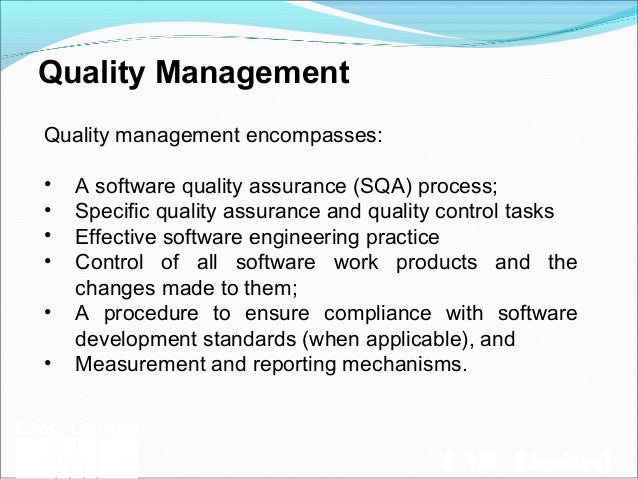
Software Quality Management (SQM) involves a extensive approach to making certain software meets the required standards and works as expected. That encompasses various methods, including planning, assurance, control, and improvement, geared towards delivering dependable and high-performing computer software. Traditionally, this procedure relied heavily on manual testing and static methodologies, which could be labor intensive and prone to be able to human error.
2. The Emergence involving AI in Software program Quality Management
Artificial Intelligence, particularly via machine learning (ML) and data analytics, has emerged because a game-changer inside software quality management. By leveraging AI, organizations can improve various facets of software quality, including problem detection, test automation, and predictive stats.
3. AI-Powered Analyze Automation
Probably the most substantial contributions of AJE to software top quality management with the sphere of test software. Traditional test automation frameworks often demand extensive coding and maintenance. AI-driven check automation tools have got revolutionized this procedure by offering:
Self-Healing Testing: AI algorithms could identify changes in the application’s program and automatically change test scripts accordingly, reducing maintenance initiatives and minimizing analyze failures due to be able to UI changes.
Wise Test Generation: AJE can analyze historic data and end user behavior to generate test cases that are more associated with real-world scenarios, improving test coverage and even relevance.
Visual Screening: AI-powered visual screening tools can find visual discrepancies and even anomalies in the particular UI that may be missed by simply traditional testing strategies, ensuring a even more consistent user knowledge.
4. Predictive Analytics for Defect Administration
AI’s ability to analyze large volumes of data in addition to recognize patterns causes it to be an invaluable device for defect management. Predictive analytics utilizes AI to:
Identify Potential Defects Early: By analyzing famous data and present code changes, AJE can predict wherever defects are most likely to occur, allowing teams to tackle issues before these people manifest.
Prioritize Flaws: AI can evaluate the impact of defects on software program performance and consumer experience, helping clubs prioritize fixes dependent on severity plus potential impact.
Improve Testing Efforts: Predictive models can aid in identifying typically the most critical areas to test, thereby optimizing testing solutions and reducing period spent on less critical parts regarding the software.
your five. Enhanced Code Quality with AI
AI technologies are likewise enhancing code top quality through:
Automated Program code Reviews: AI-driven equipment is capable of doing code testimonials, identifying potential problems for instance security vulnerabilities, code smells, and even adherence to coding standards. This minimizes the reliance in manual code opinions and ensures larger code quality.
Program code Suggestions and Enhancements: AI-powered Integrated Advancement Environments (IDEs) can offer real-time program code suggestions and improvements based on best practices and historical info, aiding developers on paper better code.
Refactoring Assistance: AI can help in refactoring signal by identifying intricate or inefficient program code segments and indicating improvements, leading to more maintainable in addition to efficient codebases.
6. AI-Driven Performance Screening
Performance testing is usually crucial for making sure that software are designed for expected loads and even perform optimally below various conditions. AI enhances performance assessment by:
Dynamic Load Testing: AI may simulate real-world consumer loads and assess system performance underneath different scenarios, supplying insights into possible bottlenecks and overall performance issues.
Anomaly Detection: AI algorithms could continuously monitor efficiency metrics and detect anomalies in current, permitting prompt input and resolution.
Useful resource Optimization: AI can easily analyze performance information to optimize source allocation, ensuring of which software performs proficiently without overloading technique resources.
7. Styles Shaping the continuing future of AI in Software Quality Management
Several important trends are healthy diet the future of AI in computer software quality management:
Integration of AI along with DevOps: The incorporation of AI together with DevOps practices, usually referred to since AIOps, is streamlining the continuous the use and continuous application (CI/CD) pipelines. AJE helps in robotizing and enhancing different stages of typically the DevOps lifecycle, through code integration to be able to deployment and monitoring.
Regarding No-Code/Low-Code Screening Platforms: AI is definitely driving the growth of no-code/low-code assessment platforms that enable users with minimum technical expertise to make and manage checks. These platforms use AI to easily simplify test creation in addition to management, making quality assurance more accessible.
Improvement in Natural Vocabulary Processing (NLP): NLP technologies are staying used to interpret and analyze user requirements and check scenarios written inside natural language. This permits more intuitive and even automated test case generation based about user specifications.
Improved Concentrate on AI Integrity and Bias: Because AI becomes a lot more integral to quality management, addressing ethical considerations and biases in AI algorithms is gaining importance. Making certain AI systems are fair, transparent, and unbiased is usually crucial for preserving trust in computerized quality management operations.
8. Challenges plus Considerations
While AI offers numerous positive aspects, there are challenges and considerations to be able to be aware associated with:
Data Quality in addition to Privacy: The usefulness of AI in software quality supervision depends on typically the quality of information that processes. Ensuring files privacy and security is essential to avoid misuse and guarantee compliance with restrictions.
Integration with Current Systems: Integrating AJE tools with present software development and quality management devices may be complex and may require modifications to workflows and processes.
Skill Demands: Leveraging AI effectively requires specialized abilities and knowledge. Businesses need to spend money on training and talent development to improve the benefits of AI within quality management.
on the lookout for. Summary
AI will be revolutionizing software high quality management by launching more effective, accurate, in addition to predictive approaches to be able to testing and top quality assurance. From boosting test automation in addition to defect management to be able to improving code perfromance and quality testing, AI is definitely driving significant developments in the industry. As AI solutions continue to evolve, they will likely bring a lot more impressive solutions to the particular challenges of computer software quality management, healthy diet the continuing future of software growth and delivery. Taking on these technologies plus staying up to date with emerging trends is going to be essential to leveraging AI’s full potential in ensuring high-quality software program.