
The Software Testing Life Cycle (STLC) is a systematic process designed to assure the quality and functionality of software program products. It encompasses a series regarding steps and levels, each aimed from identifying defects and even ensuring that the ultimate product meets particular requirements. This article provides a comprehensive overview of the STLC, detailing its levels, objectives, and value in the computer software development process.
one. Introduction to STLC
The STLC will be a sequence associated with activities performed in the course of the software screening process. It helps to ensure that the software capabilities as intended plus meets the end-user requirements. By subsequent a structured approach, the STLC can be useful for detecting issues earlier, reducing risks, plus improving overall software program quality.
2. Stages of the Application Testing Life Cycle
The STLC comprises of several crucial phases, each together with specific goals and deliverables: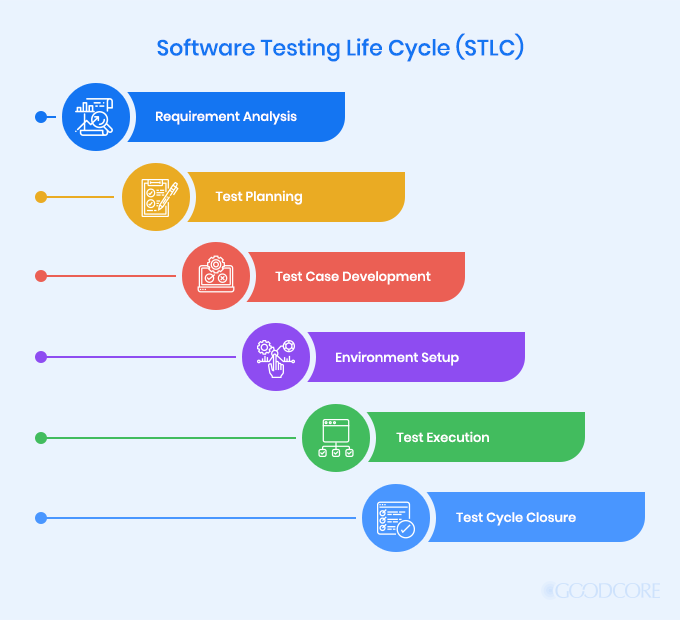
Requirement Evaluation
Objective: Understand and even analyze the needs associated with the software to determine the testing needs.
Actions:
Review requirement papers, use cases, and even user stories.
Determine testing requirements plus dependencies.
Define testable requirements and prepare test scenarios.
Giveaways:
Requirement Traceability Matrix (RTM)
Test Scenarios
Significance: This phase ensures that screening aligns with the particular software requirements, minimizing the risk regarding missing critical check cases.
Test Organizing
Objective: Develop a comprehensive test prepare that outlines the particular testing strategy, scope, resources, and routine.
Activities:
Define test strategy and targets.
hop over to this site , including time, tools, and personnel.
Identify testing types (e. h., functional, non-functional, regression).
Develop a check schedule and source plan.
Deliverables:
Check Program
Test Routine
Resource Allocation
Importance: Effective test organizing helps in organizing plus managing the screening process, ensuring that most aspects of the software program are covered.
Test Design
Objective: Design detailed test situations and prepare check scripts based about the requirements and test scenarios.
Activities:
Develop test cases with defined inputs, actions, and expected results.
Create check data and get ready test environments.
Overview and validate analyze cases to make sure coverage.
Deliverables:
Test Situations
Test Information
Analyze Scripts
Significance: Well-designed test cases make sure thorough testing associated with the software to help in identifying disorders efficiently.
Test Execution
Objective: Execute test cases and validate the software towards the defined requirements.
Activities:
Execute test out cases in accordance with the analyze plan.
Document genuine results and assess them with predicted outcomes.
Log defects for any discrepancies found during tests.
Deliverables:
Test Setup Information
Defect Studies
Significance: Test setup is vital for validating that this software performs as expected and for identifying and telling any issues.
Problem Reporting and Tracking
Objective: Report plus track defects in order to ensure they will be addressed and resolved.
Activities:
Report defects with detailed explanations, steps to reproduce, plus severity.
Track problem status and function with the expansion staff for fixes.
Retest the software right after defects are resolved.
Deliverables:
Defect Studies
Defect Status Updates
Significance: Effective problem reporting and tracking help in taking care of and resolving problems, making certain the last product meets good quality standards.
Test Closure
Objective: Finalize typically the testing process in addition to evaluate the general effectiveness of the particular testing activities.
Actions:
Review test effects and compare these people with objectives.
Record lessons learned and best practices.
Get ready test summary reviews and provide feedback.
Giveaways:
Test Summary Statement
Lessons Learned Document
Significance: Test seal helps to ensure that the testing process is examined and improved with regard to future projects, adding to to continuous quality improvement.
3. Significance of STLC
The STLC plays a important role in the particular software development lifecycle:
Ensures Quality: By simply following a organised approach, STLC will help in identifying plus fixing defects, making sure that the software meets quality specifications.
Reduces Risks: Early detection of concerns reduces the danger of software disappointments and enhances general reliability.
Improves Performance: A systematic tests approach helps throughout optimizing resources plus time, bringing about more efficient testing operations.
Enhances Communication: Clear documentation and reporting foster better communication between testing teams, developers, and stakeholders.
4. Challenges inside STLC
While the STLC is created to enhance application quality, several difficulties may arise:
Need Ambiguities: Unclear or perhaps incomplete requirements can result in ineffective testing in addition to missed defects.
Reference Constraints: Limited sources or time limitations may impact the thoroughness of the testing process.
Defect Management: Managing plus tracking defects effectively can be challenging, specifically in complex projects.
5. Guidelines intended for Effective STLC
To overcome challenges plus ensure effective STLC, consider the subsequent best practices:
Clear Specifications: Make sure that requirements are usually well-defined and recorded to facilitate precise testing.
Thorough Organizing: Develop a comprehensive check plan that consists of all facets of typically the testing process.
Regular Communication: Maintain typical communication with stakeholders and development teams to address problems boost progress.
Constant Improvement: Evaluate and refine testing techniques according to lessons mastered and feedback to enhance future testing activities.
6. Bottom line
The Software Testing Life Cycle (STLC) is an necessary framework for making sure the quality and features of software products. By following its organised phases, organizations may effectively identify and address defects, reduce risks, and provide high-quality software. Knowing and implementing the STLC not merely improves software reliability yet also contributes to overall project good results. Through meticulous planning, execution, and constant improvement, the STLC can be useful for achieving superiority in software screening and development.