
In the rapidly changing field of man-made intelligence (AI), making sure the robustness and reliability of AJE models is very important. Traditional testing methods, while valuable, generally fall short if it comes in order to evaluating AI methods under extreme circumstances and edge instances. Stress testing AJE models involves driving these systems beyond their typical operational parameters to uncover vulnerabilities, ensure strength, and validate overall performance. This article is exploring various methods intended for stress testing AI models, focusing in handling extreme circumstances and edge situations to guarantee robust and reliable systems.
Understanding Stress Tests for AI Versions
Stress testing inside the context of AJE models refers in order to evaluating how some sort of system performs underneath challenging or unusual conditions that get beyond the common operating scenarios. These tests help discover weaknesses, validate functionality, and be sure that the AI system could handle unexpected or perhaps extreme situations without failing or producing erroneous outputs.
Important Objectives of Tension Testing
Identify Weak points: Stress testing shows vulnerabilities in AI models that may not have to get apparent throughout routine testing.
Make sure Robustness: It analyzes how well the model can deal with unusual or serious conditions without wreckage in performance.
Validate Reliability: Makes sure that typically the AI system preserves consistent and exact performance in undesirable scenarios.
Improve Protection: Helps prevent prospective failures that could lead to safety problems, especially in critical applications like autonomous vehicles or healthcare diagnostics.
Methods with regard to Stress Testing AJE Versions
Adversarial Problems
Adversarial attacks include intentionally creating advices made to fool or even mislead an AJE model. These inputs, often referred to as adversarial cases, are crafted in order to exploit vulnerabilities throughout the model’s decision-making process. Stress testing AI models using adversarial attacks will help evaluate their sturdiness against malicious treatment and ensures of which they maintain stability under such circumstances.
Techniques:
Fast Lean Sign Method (FGSM): Adds small souci to input information to cause misclassification.
Project Gradient Ancestry (PGD): A more advanced method that iteratively refines adversarial examples to optimize unit error.
Simulating Extreme Data Situations
AI models tend to be skilled on data that represents typical conditions, but real-world cases can involve data that is substantially different. Stress screening involves simulating serious data conditions, like highly noisy files, incomplete data, or even data with uncommon distributions, to determine how well the model can deal with such variations.
Approaches:
Data Augmentation: Bring in variations like noise, distortions, or occlusions to test design performance under improved data conditions.
Synthetic Data Generation: Make artificial datasets of which mimic extreme or rare scenarios not really present in typically the training data.
Advantage Case Screening
Border cases refer to uncommon or infrequent scenarios that lie from the boundaries in the model’s expected advices. Stress testing using edge cases assists identify how the model performs inside these less popular situations, making sure it can handle unusual inputs without malfunction.
Techniques:
Boundary Examination: Test inputs which are on the edge in the input area or exceed standard ranges.
Rare Occasion Simulation: Create scenarios that are statistically improbable but plausible to be able to evaluate model functionality.
Performance Under Source Constraints
AI models may be implemented in environments with limited computational assets, memory, or energy. More Help underneath such constraints ensures that the model continues to be functional and performs well even inside resource-limited conditions.
Methods:
Resource Limitation Screening: Simulate low recollection, limited processing strength, or reduced bandwidth scenarios to assess model performance.
Profiling in addition to Optimization: Analyze source usage to identify bottlenecks and optimize typically the model for effectiveness.
Robustness to Environmental Changes
AI designs, especially those deployed in dynamic surroundings, need to manage changes in external situations, such as lighting variants for image acknowledgement or changing sensor conditions. Stress tests involves simulating these types of environmental changes to ensure that typically the model remains strong.
Techniques:
Environmental Simulation: Adjust conditions such as lighting, weather, or sensor noise to check model adaptability.
Situation Testing: Evaluate the particular model’s performance within different operational contexts or environments.
Anxiety Testing in Adversarial Scenarios
Adversarial cases involve situations exactly where the AI unit faces deliberate issues, such as endeavors to deceive or perhaps exploit its weaknesses. Stress testing throughout such scenarios will help assess the model’s resilience and its capacity to maintain accuracy and reliability under malicious or perhaps hostile conditions.
Methods:
Malicious Input Testing: Introduce inputs particularly designed to exploit known vulnerabilities.
Security Audits: Conduct comprehensive safety measures evaluations to spot possible threats and weaknesses.
Best Practices with regard to Effective Stress Assessment
Comprehensive Coverage: Make sure that testing encompasses a wide range of scenarios, which includes both expected and unexpected conditions.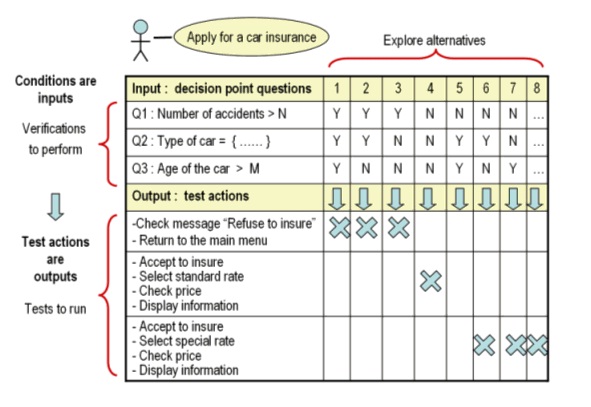
Constant Integration: Integrate anxiety testing into the particular development and deployment pipeline to spot issues early and be sure ongoing robustness.
Collaboration along with Domain Experts: Operate with domain experts to identify reasonable edge cases plus extreme conditions pertinent to the application.
Iterative Testing: Perform tension testing iteratively to be able to refine the unit and address identified vulnerabilities.
Challenges and even Future Instructions
When stress testing is crucial for guaranteeing AI model robustness, it presents various challenges:
Complexity associated with Edge Cases: Figuring out and simulating genuine edge cases can be complex and resource-intensive.
Evolving Threat Landscape: As adversarial methods evolve, stress screening methods need to be able to adjust to new risks.
Resource Constraints: Tests under extreme circumstances may need significant computational resources and expertise.
Future directions inside stress testing regarding AI models include developing more sophisticated testing techniques, leveraging automated testing frames, and incorporating device learning methods to make and evaluate serious conditions dynamically.
Conclusion
Stress testing AI models is vital regarding ensuring their sturdiness and reliability in real-world applications. Simply by employing various methods, such as adversarial attacks, simulating intense data conditions, plus evaluating performance underneath resource constraints, designers can uncover vulnerabilities and enhance the resilience of AJE systems. As the discipline of AI carries on to advance, on-going innovation in stress testing techniques will be crucial for preserving the safety, performance, and trustworthiness regarding AI technologies